Solar income on a rural Ontario home: a plain-English look at the microFIT contract
By Keith Williams & Lisa C. Follows · Willows Realty Group
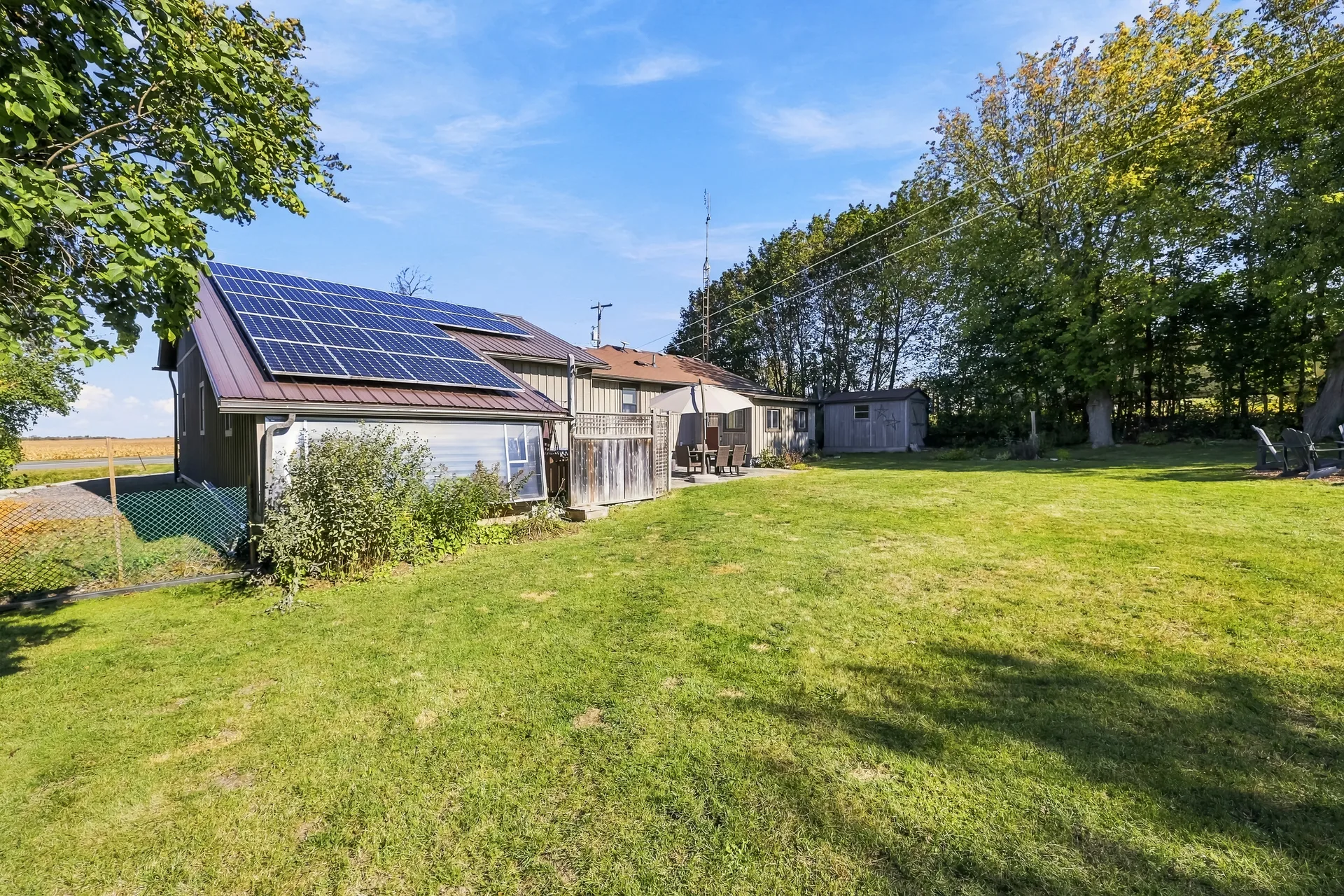
One of the most common questions we get about 170 Hwy 7A is about the solar panels on the metal roof. The answer is straightforward: they generate income under an existing microFIT contract, a locked-in revenue stream that keeps paying out for the life of the contract. Here is how the program worked and what it means for a buyer.
What was the microFIT program?
Ontario launched microFIT in October 2009 as a feed-in tariff for small renewable generation projects of 10 kilowatts or less, mostly rooftop solar. The design was simple: the owner signed a 20-year contract and received a guaranteed, fixed payment in cents per kilowatt-hour for every unit of electricity delivered to the grid, no battery or storage games required.
Early contracts paid premium rates (rooftop solar under 10 kW launched around 80 cents per kilowatt-hour, since reduced in later versions of the program), with the rate locked in at signing for the full term. Later versions paid less, but every contract's rate was fixed for its 20 years.
Is the program still open?
No. The IESO closed the microFIT window to new applicants on December 1, 2017, once procurement targets were met. Homeowners who want solar today typically look at net metering through their local distribution company instead. The important point for buyers: existing 20-year contracts continue to be paid out in full until they expire.
What it means for a buyer of 170 Hwy 7A
The panels here sit on the metal roof at the rear of the house, and the associated microFIT contract is an existing feature of the property. For a financially minded buyer, that income can help offset mortgage payments or property taxes month to month. It is one of those quiet features that does not show up in square footage but shows up in the operating math.
Contract terms are property-specific, so the right move is to ask us for the contract details during a showing and have your lawyer confirm transfer and assignment before you commit. We are glad to walk you through what we know, and to put you in touch with the current owners' documentation.
A microFIT contract is an income feature, not a decoration. Verify the rate, the remaining term, and the transfer mechanics with your broker and your lawyer.
What we would ask about any solar home
- Remaining years on the contract
- The contracted rate per kilowatt-hour
- Who holds the contract and how it transfers
- Panel condition and roof age
- Local Distribution Company paperwork
- Insurance treatment of the system
Want the specifics on this property's contract? Keith and Lisa can pull the details for your due-diligence list. Read more about the program at the IESO's microFIT page , or send us a note.